''You may be looking to recover an old sofa, or buy a new arm chair. High traffic areas, such as family or living rooms will need durable fabrics. While furniture that doesn’t get as much wear and tear for example a cushion cover or headboard, needn’t be as robust.''
Upholstery
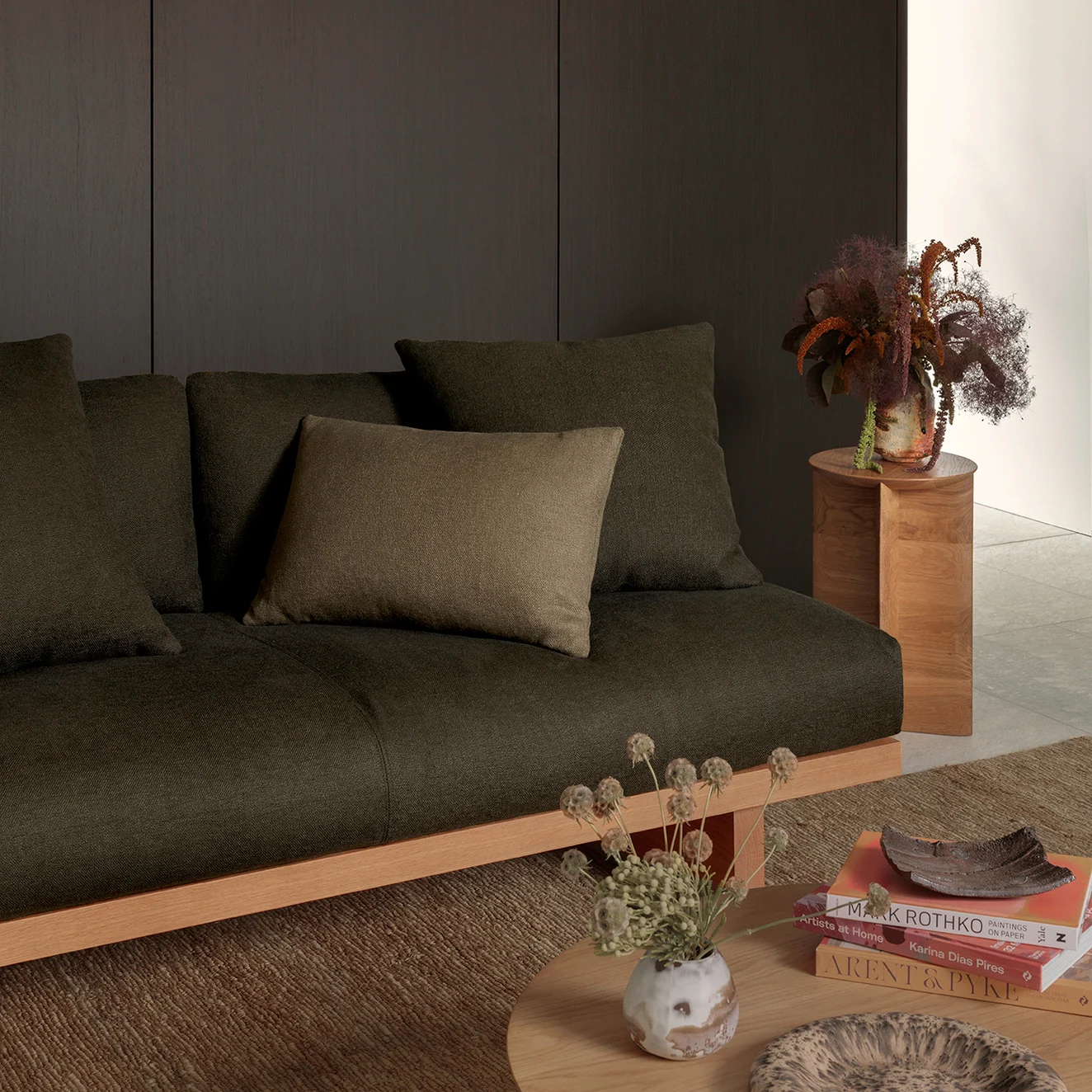
Applying the latest technology, gorgeous fabrics are being designed to ensure ultimate performance, even in the toughest conditions.
Thoughtfully considered and curated upholstery fabrics offer the perfect palette for designers and homeowners to add their individuality to a room. The textile business is evolving, technological advancements in upholstery fabrics now have everything from lux linens and velvets, to highly robust polyester cottons. These fabric compositions all come with a range of high performance benefits such as UV resistance, moisture wicking, anti-microbial and stain resistant properties. Across all of these upholstery fabric options the handle is becoming softer and the end result environmentally safer. The performance of an upholstery fabric is hard to know, and therefore shouldn't be based on looks. Fabric for furniture application needs to be chosen based on look, feel and peformance.
Upholstery Considerations
Upholstery fabrics are used for the covering of chairs, couches and other furniture. They come in a variety of colours, weaves, and designs and are stronger than curtain fabrics. The style of your home and the function of the item being covered is also just as important. Is it a formal living room? Does the chair get battered by children or pets?
You may want to reupholster a worn out couch or perhaps purchase an occasional chair. Whatever the piece of furniture, you need to think about how it's going to be used, by who, and where it will be positioned in your home. High foot traffic areas such as family or living space will require a durable material, while furniture that isn’t used as often, for example a cushion cover or bedhead, needn’t be as sturdy.
Upholstery fabrics offer certain characteristics that make them more appropriate to particular jobs. Consider at the attributes below:
High Abrasion Results / Rub Ratings
A fabric’s durability is dependent on the quality of the yarns, dye-stuffs, weaving, and finishing techniques used during the manufacturing process. All Mokum textiles adhere to tough testing processes to ascertain their durability and resistance to abrasion/rubbing - i.e. a fabric's ability to withstand the breakdown of yarns caused by everyday surface friction.
Test results give critical data about a fabric's durability and relevancy for certain uses, allowing us to make recommendations about how to use them properly. We externally test all Mokum textiles in Melbourne at a respected laboratory who are amongst the most conservative and stringent in the world, due to the extremely harsh environmental conditions we face here in Australia and New Zealand.
The British standard, known as Martindale Cycles, is also recognised in Europe, Australia, and New Zealand. Wyzenbeek Double Rubs is the North American standard. These mutually exclusive tests are performed by different machines with different methodologies, so a high result in one test does not determine or infer a high result in the other, they stand as separate results with no correlation.
For the Martindale Cycles test a small piece of the fabric (known as the testing swatch) is wrapped around an oscillating head and rubbed against a standard abradant (wire mesh or cotton duck) in an irregularly looping figure-8 motion. The machine is motor driven with an electronic digital counter measuring the number of loop cycles, or “rubs.” The end point is reached when two adjacent yarns break, or in the case of a pile fabric such as velvet the test will end when the pile has completely worn away, or when the count reaches 100,000 rubs – whichever comes first! The machine is switched off at this point because a result higher than 100,000 rubs is not thought to be an indication of increased lifespan. The test is performed four times and the final average is drawn and recorded on our sampling as a numerical rub rating.
The Wyzenbeek Double Rub test is performed in a similar way, in that a series of small testing swatches are rubbed against a stationary abradant but in this case, instead of an oscillating motion it is has a backwards and forwards motion in both the warp and weft yarn directions. Again, the normal end point is when two adjacent yarns break, or the count reaches 100,000 rubs. From numerous tests an average is drawn and listed on our sampling. Essentially - the higher the number, the better the resistance to surface abrasion.
Flame Retardant Fabrics
FR stands for flame retardant. FR properties can be either inherent in the yarn or applied as a finish to the woven fabric. Inherent FR cannot be washed out and generally achieves a higher certification of fire retardancy. An after-market or solution finish applied to the material can also achieve a good FR rating in the short term but may lessen over time depending upon how the fabric is treated and cared for. Some 100% polyester qualities can also produce a successful fire retardancy test result due to the nature of the fabric, which is inclined to melt in direct heat rather than contribute to the spread of a flame.
FR standards vary across countries and sometimes regionally within countries. When specifying a commercially applicable FR rated fabric it is best practice to check the local standard or building code requirements and fabric suitability with an expert. The responsibility for attaining the appropriate FR certification lies with the specifier, as every project and location has a different requirement with varying context.
Outdoor Performance Fabrics
Many of our outdoor fabrics combine high performance attributes such as UV resistance, soil and stain resistance, mildew resistance, high abrasion results and fire retardancy with the bonus of being machine washable. This ensures their relevance for residential, commercial, indoor, and outdoor projects where high performance attributes and easy care features are required and/or desired.
Designed and engineered for both outdoor and indoor use, these high performance textiles are durable, easy care, and have fabulous sunlight resistance. Due to technological advancements in outdoor yarns, these textiles offer a more natural aesthetic with a softer handle and finer construction than ever before. Outdoor fabrics are woven in solution dyed acrylic and solution dyed olefin/polyolefin/polypropylene compositions which are proven to provide benefits in both the quality and longevity of the fabric in our harsh outdoor environment.
UV Resistant Fabrics (Fade Resistant Fabrics)
No matter where you live in the world, our homes are vulnerable to harmful levels of sunlight. UV rays are still present even when sunlight isn't and although all fabrics will fade under UV exposure, it is the speed of that fading which UV resistant textiles can combat. Through a combination of yarn type and dying processes, fabrics will perform to a greater or lesser extent under harsh sun conditions and UV exposure.
The Blue Scale rating is a way to understand the relative resistance a fabric may have to UV. The Blue Scale runs from 1 = very poor to 8 = exceptionally good. Fabrics achieving a Blue Scale result of 6 will perform well over time but as a general rule of thumb, if you are seeking a UV resistant fabric select one with a rating of 7 or 8 as products achieving these results are usually designed for use outside.
We take great care to deliver outdoor designs with quality finishes, colour palettes, and design styles which could work just as well inside the home. This complements our indoor-outdoor lifestyles and enables these spaces to flow into each other.
Stain Resistant Fabrics
Technological advances in fabric design have led to fabrics that can withstand stains and spills; allowing you to rest easy knowing that your beloved furniture will remain clean year after year. These fabrics are available in many colours and designs and are a suitable choice for families with children and pets. Unlike topical stain resistant coatings which are applied to woven fabrics after production, inherent stain resistance is produced when the molecular structure of the textile is engineered to possess stain resistant characteristics at the yarn level, which will last for years and can't be washed out.